top of page


Scrap Tire Recycling System
Process Description
1st Stage -First Feeding and Crushing
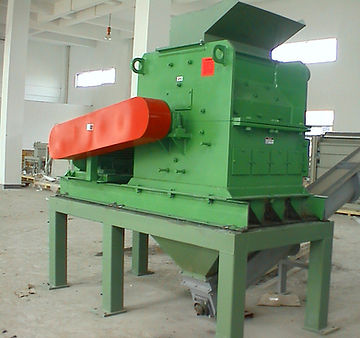
A coarse crusher is used to reduce the volume of large materials, performing preliminary crushing so that subsequent equipment can stably grasp and convey them.

First stage crushing and discharge
2nd Stage-Second Feeding and Crushing
The material after primary crushing enters a second crusher for more refined shearing, which not only facilitates subsequent impurity separation but also improves the final fuel combustion efficiency.
_edited.jpg)
Crusher operation
3rd Stage -Magnetic Separation
Before entering the separator, metals such as wires and iron sheets must be forcibly removed by a suspended or drum magnetic separator. This ensures that the SRF finished product is free of metal impurities and avoids damage to the boiler.

Magnetic separator operation
4th Stage -Sorting Conveyor
Non-ferrous metals are further separated using vibrating screens or air-powered sorting equipment to improve fuel purity and ensure that materials meet SRF standards.

Light and heavy sorting
Eddy current sorting
5th Stage - Mixing mixer
This is the core of SRF's stable quality. Materials from different sources and with different calorific values are forcibly stirred to homogenize them.
Granulator discharge
Granulator discharge
6th Stage -Discharge
The processed SRF bulk material is sent to the storage silo via the discharge conveyor. The product at this stage is SRF bulk material, which has the characteristics of high calorific value, low moisture content and uniform particle size. It can be directly supplied to cogeneration plants, cement kilns or special incinerators.
Discharge
.jpg)
RDF workflow video
bottom of page